
Modifying Exercise Around Injury: A Guide for Safe and Effective Training and Rehabilitation
Guest author and Doctor of Physical Therapy, Chase Christy, looks behind the curtain of a complex but common issue with injuries in training and walks the reader through a methodical approach to help turn injuries from the Wall of China into a speed bump.
Injuries can be a significant setback in anyone’s fitness journey, but they don't have to mean the end of your exercise routine. You can stay active and promote recovery with the proper modifications and adjustments. Here, we’ll explore various ways to modify your exercise regimen when facing an injury.
The Problem
The current healthcare provided in the United States is subpar at best. It is a reactive creature that does very little to help itself from a preventative standpoint. Most medical schools (80-90%) fail to cover essential nutrition and exercise physiology. So, it shouldn’t be surprising that your doctor tells you, “Well, just don’t do it if it hurts,” when confiding in him/her at your appointment, which is a wildly lazy answer that a 6-year-old could give you. It's complex and skilled to adapt training to an injury. It requires an in-depth evaluation/examination with equally in-depth questions sprinkled throughout. But more on that later.
What does that look like in the Physical Therapy World?
While Physical Therapists have more training in these areas, they often fail to practice what they preach from a health and fitness standpoint. This leads to some PTs being incompetent in the realms of people that are frequently overlooked. These groups involve CrossFitters, Olympic Weightlifters, Powerlifters, Body Builders, Hyroxers, and other fitness athletes from different backgrounds. Many healthcare providers, PTs included, will take one look at these individuals and assume they don’t need PT. Or, if they magically get referred to PT, they will be grossly under-dosed from an exercise standpoint. The guy who deadlifts 500+ pounds doesn’t need side-lying clamshells with a red theraband… he needs exercise modifications to the movements he loves and wants to do.
Modify Strength Training
Strength and conditioning are essential for maintaining muscle mass and overall fitness but may need to be adapted around an injury. How we adapt, however, is of the utmost importance. As a general rule, we have three ways to modify. Volume. Intensity. Range of Motion. The one we choose depends mainly on what we find when asking crucial questions. We likely wouldn’t adjust the volume with a client who reports increased pain with deeper ranges of motion or increased weight/resistance. Nor would we modify intensity in a patient with complaints of increased pain with more repetitions. If adjusting those is not in the cards or is ineffective, we look to substitute another movement that still challenges the area of pain tolerably.
Exercise parameters
Volume refers to the amount of repetitions one does in a training program. Intensity refers to the amount of resistance one uses for a given movement. Range of motion refers to how much joints move when performing an exercise. We discover the culprit by establishing the “mountain of irritability.” Which is a fancy way of saying, “How long does it take for the tissue to get mad?” and “How long does it take for the tissue to return to baseline.” So if a client/patient comes through the door and reports that pain reaches its peak by the 4th set of a movement… this likely isn’t a range or intensity issue. It is likely a volume issue. This can be extrapolated to include the other variables, but I think you understand. As mentioned above, if adjusting said variables proves ineffective at allowing a movement to be tolerable, that is when we substitute in another movement that hopefully still challenges the involved area. The last thing we want to do is not move or challenge the tissue in question, as this leads to further atrophy and increased instability.
Pain should be tolerable in the moment and 24 hours after
In conclusion, it is essential to listen to your body. If the movement is tolerable in the moment, but the tissue is flared up in the 24 hours after, then further modification is required. We need both in the moment and the 24 hours after to be tolerable to know that we are hitting the intended stimulus. As long as one sticks to this, the risk of further injury is unlikely. That is, of course, as long as one is getting quality sleep, nutrient-dense food, and managing stress healthily. If those are out of whack, then the odds of full recovery in a reasonable timeframe are slim—more on that for a later blog post.
Afterword
Chase Christy is a board-certified Doctor of Physical Therapy, personal trainer, avid CrossFitter, husband, father, and dear friend. His practice in Amarillo, Texas services a wide range of patients in the Texas Panhandle. He is also very active on social media, providing invaluable content and education on injuries, training and a lifestyle of fitness from the eyes of a physical therapist. I personally reach out to him on a near-weekly basis for his opinions, knowledge and expertise and would refer anyone seeking out physical therapy on any level. Please give his accounts a follow and check out his website to learn more! - Dylan
HOW YOUR HEALTH HEEDS THE HOLIDAYS
Halloween hits. Chaos ensues. It doesn’t end for over two months. How to make it to the New Year having still made progress in your physical performance.
Intro
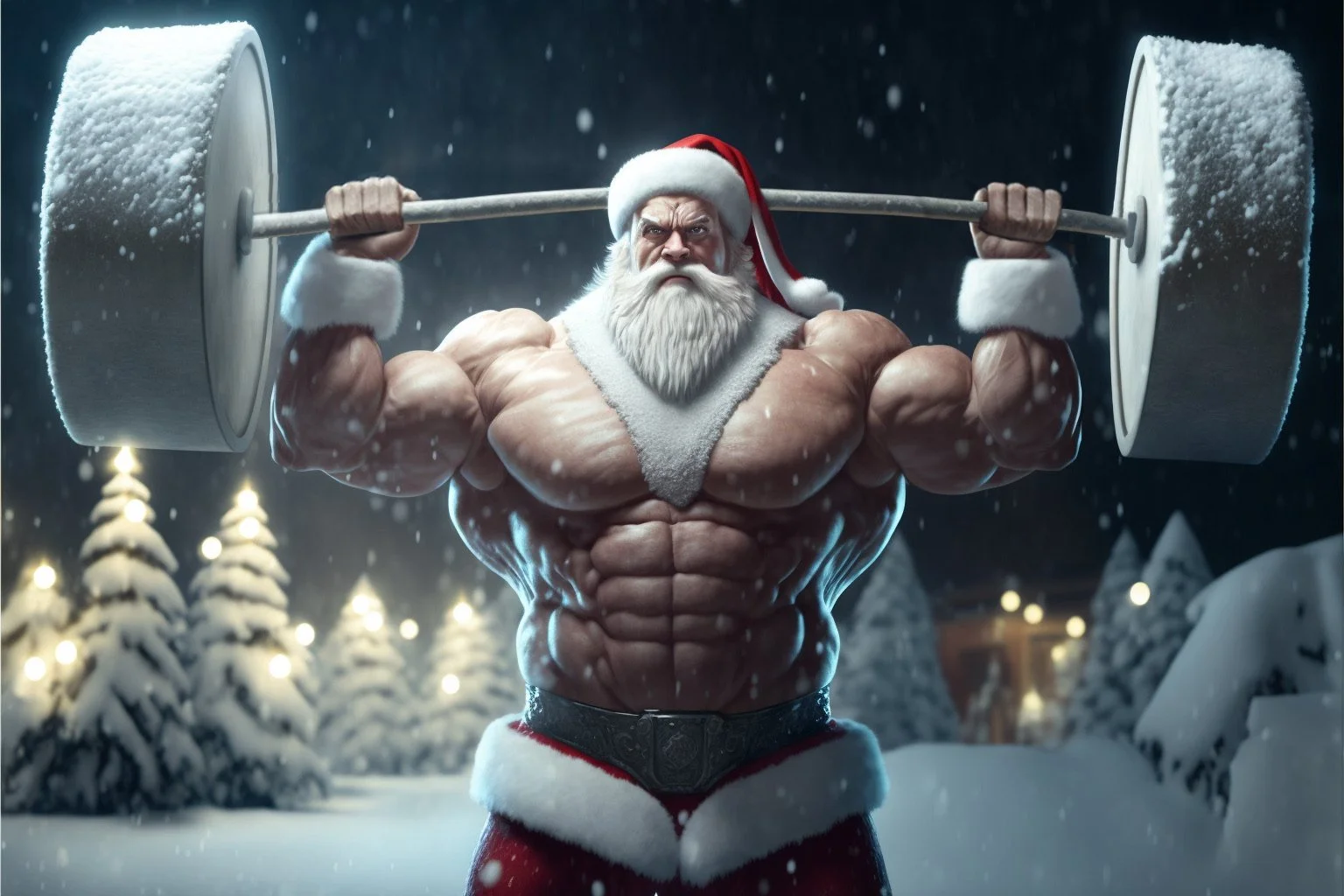
Tomorrow is a big day. Possibly the most important election of our lifetime worldwide is happening and has undoubtedly carried with it more social angst than anyone could have imagined. Thursday was a big day (Halloween, in case you forgot). We all know trick-or-treating is for children, but that doesn’t stop us from throwing down like we’re about to go into hibernation. It’s now the big season of Thanksgiving. Attics of the Christmas fiends are being emptied. Plans and family traditions are being set into motion across the country. Beer, sugar, and [sitting to watch] football are sneaking a firm grip on people’s arteries. Soon after, Black Friday will inaugurate a season which is unmatched when it comes to the overconsumption of everything your body was not designed to ingest, a level of inactivity that draws dangerously close to resembling a scene from Wall-E, and through all of this the Earth’s axis tilts further and further from the sun. This means it gets colder. It becomes really easy to cozy up on the couch with a venti double shot coffee-flavored Kool-aid with milk-flavored syrup and caramel drizzle (which is just sugar, by the way). Everyone wears more clothes. Minds stray from thinking about what bodies look like underneath. Worries about what bodies feel like or what they’re capable of get drowned out by the sound of Santa’s sleigh bells. It’s all a distraction. None of this is to demean the importance of the holidays to anyone who holds them dear, but sacrificing potentially years or the quality of our short lives for a fleeting way of life that glorifies sugar and comfort is a trade that no one should make. The silver lining is that I’m about to make a formidable argument that you don’t have to. That no one has to.

Flu Season: An American Myth
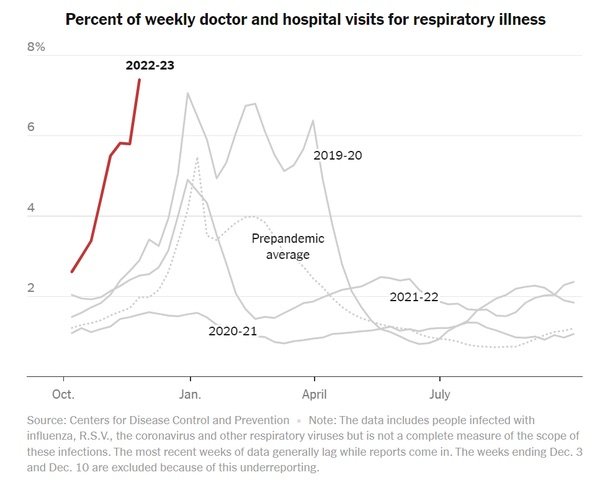
Whether you’re a 7th grade volleyball player who just began your offseason or you’re a grandfather who’s needed to lose that pesky ten pounds for the last thirty years, this can be a rough time of year for your health. There are few who reach the new year unscathed by strep throat or COVID or unwanted weight gain. However, there’s a heavy misconception that we’re all thrown into the pit that is “Flu Season” year after year, simply hoping that we don’t have to stand out in the cold for too long so we don’t get sick. The fact of the matter is that the Influenza Virus can only die by temperatures that exceed 160 degrees Fahrenheit. Additionally, researchers have discovered an interesting relationship between the increased amount of time that people spend indoors and the uptick in the flu transmission during colder months. After all, we know that the greatest spread of the virus happens through particles of coughing, sneezing or other bodily fluids from one person to another. But I’m here to discuss the real reason why flu season is a fluke. The flu is not the problem. Many viruses and other germs that cause sickness are constantly mutating and being spread all over the world, and not just in the winter. It’s a fact of life and by-and-large one we can’t control. What we do have control over is our own defense against these human pathogens. Our immune system. It’s a gift endowed to us by our Creator that is an active and adaptive system of defense against the ever-changing microscopic world. Like all systems, our immune system can only operate at the level of its foundation. A vital piece of equipment for your immune system is vitamin D. On average, about 40% of Americans are deficient in vitamin D. The most bioavailable form of this is sunlight. It’s been estimated that during the winter months, the average person loses about 80% of the very little sunlight they were getting in the summer months. Not to get political, but it’s even been proposed that the COVID outbreak could have been significantly blunted had people not been mandated to stay at home, simply from the amount of sunlight that their regular lives allowed them to get. Ultimately, the effectiveness of your immune system is directly dependent on your decisions and behaviors that make up your health. Yes, there are a few other factors at play like your environment and your genetics, but your health is the one you have an insanely large amount of control over. “Flu Season” can be a tradition for you or it can be an American myth. So if this cultural phenomenon is completely avoidable, why do people put themselves through it? I can tell you for a fact that it’s definitely not because the new year is right around the corner and everyone can magically make huge lifestyle changes due to their far-fetched resolutions. But it’s not that the reason behind all of these social norms and behaviors is necessarily a bad thing. The opposite is actually true. What’s the cliché, “the reason for the season”? Many people appreciate the holidays because of the time they spend with family, the spreading of joy, giving to those in need, for some - Hanukkah, for some - Jesus, and for most - Santa. Whatever your reason for celebrating, don’t start blaming it quite yet. It’s possible to hold your family’s traditions along with the Christmas spirit and winter joy in your heart without severely risking your heart’s ability to keep beating.
“It’s possible to hold your family’s traditions along with the Christmas spirit and winter joy in your heart without severely risking your heart’s ability to keep beating.”
What if I told you that there were only two concepts, that if you could find it possible to wrap your head around, would not only change your entire outlook on your health, fitness and performance during the winter months, but that you could actually view this season as an opportunity to get a leg up on the rest of the world? Because that’s not a rhetorical question.
The Transcendent Resolution
I’ve already mentioned several times now things like reason, purpose and foundation. All of these terms reference the underlying motivation behind why we do what we do. But too often in our society, we allow novelty and comfort cloud the “why” and in turn, our judgment. When people originally started celebrating Halloween, no one piped up and said “Why don’t we eat our weight in processed sugar, artificial flavors and a waxy candy that resembles corn kernels?” When people first started celebrating Thanksgiving, I doubt a Native American or an explorer toasted to eating so much that they passed out, only to wake up the next morning to sit, drink too much alcohol, and peruse Amazon Black Friday deals on the couch all day. Finally, whatever you subscribe to, most winter holidays are rooted in religious celebrations. The last time I checked, gluttony and sloth aren’t encouraged in any orthodox religion. What I’m getting at here is that the intentions behind these celebrations were for things much deeper than too much food, wine and laziness. It’s not my job to spell out exactly what the intention was for those days and seasons, but it is my job to help you realize that almost everything done without intention will drift toward gluttony and sloth. Enough dogma. Let’s get practical. What does it look like to be intentional during the holiday season?
Decide when you’re going to allow yourself to consume in excess and poor quality. This might seem like a wild thing to say, and definitely to put into practive, but consider the alternative. Imagine a list of days from last year, Halloween to New Year’s, with a comprehensive record of everything you consumed. If you looked that over right now, first of all you’d be disgusted, and additionally you wouldn’t want that for yourself this holiday season. That’s because those decisions weren’t decisions at all. It was completely unintentional and circumstantial. You’ll be much better off making a conscious choice to full send the holiday diet on a few select days rather than just going where the wind blows you. Anyways, this is essentially the same concept that bodybuilders, powerlifters and Dwayne “The Rock” Johnson have been practicing for decades now - the cheat day. Pic of the rock eating a cheat meal
Commit to a specific, but attainable number of training days. Whether you’re running a particular training program, or you already go to the gym on a regular basis, or you’re inconsistent but willing to start a good habit, look over your schedule for the next couple of months. Determine over the next couple of months when you’ll be traveling, at events and parties, staying up late, eating like crap, and come up with a reasonable but disciplined selection of days that you’re going to train. I don’t recommend sprinting, lifting heavy, or doing high-skill movements on days where your recovery is dampened such as a day after a party with overconsumption of bad quality food or alcohol. You can, and probably should, move and sweat on those days, but don’t risk an injury with something you know you should only do when you’re fresh. I also recommend sticking to lower intensity workouts following lots of travel. Travel does not allow for regular, quality sleep as well as time in a car or plane tightens the muscles and stiffens the joints. Lastly, as corny as it sounds, something is always better than nothing. You must be smart when training under fatigue or with poor fueling, but going on a twenty minute walk the day after eating, drinking and staying up late is way better than doing nothing. Not to mention, you’ll get the opportunity to soak up some sunlight.
Take advantage of time off from work or school. Work or school holidays are an extremely exciting concept, and it gives you energy just to read those words. That’s a good thing. You should look forward to your breaks and your free time. However, people tend to overdo those times off and overindulge in activities that are only going to negate the potential rest you could get from having time off. It’s not uncommon for hard-working ambitious athletes or professionals to find themselves overworked and chronically fatigued this time of year. There are plenty of Q4 deadlines for business men and women, there are sports seasons ending and offseasons beginning and vice versa. You don’t recover from chronic fatigue, physical or mental, by spending the next two months stuffing your face with Red 40 and playing the new Call of Duty through the night. You do it by sleeping in when you get the chance. You do it by eating real food on days when there’s not a party or event you’re attending. You do it by getting outside during the day and going to bed when you get sleepy. This time off is a blessing, don’t flush it down the toilet.
Regardless of what your life is like, looking ahead when it comes to things like your training, your diet and your sleep will not only make the holidays more enjoyable, but it will enable you to begin the next season with a leg up on the rest of the world.
If You Can Dodge a Wrench, You Can Dodge a Ball
You may have heard of the abstract concept of the crucible before. In literal terms, a crucible is a metal or a ceramic container that’s used to hold other metals or very hard materials to be heated up to extremely high temperatures to allow for the melting of the materials it contains. Then, the melted material can be cast in a mold and formed into any shape necessary. When the material cools, it’s then formed into a completely new shape with an entirely new set of uses. In metaphorical terms, the waves of life define the crucible. It’s the really hard times. It’s when rent is due and you just got fired. It’s when you’ve stayed up all night studying for a test and you have a game tomorrow. It’s when your family busts out the 3rd round of desserts and candy on Thanksgiving, but you’ve planned training sessions on the next two days. It’s when you just realized you’re going to be traveling for 16 days from now until 2025, but you don’t want to gain the ten pounds you know eating fast food will cause. This concept is quite daunting, but there are a couple of ways to make it out of the crucible without looking like a lumpy mound of Big Macs.

The first way to make it through the next two months is exactly what I’ve laid out for you. See it coming. Be intentional about what you’re going to do and when. You may not bat .1000, but you’ll come out the other side way better off than if you’d stepped up to the plate blindfolded. The second way to beat the holiday season is not just to survive, but overcome it. After the holiday season follows the New Year. Many sad souls make hopeful resolutions to improve their health or performance and without fail, most of them fail. But that’s when all of the candy and desserts and sitting and crazy schedules are over. That’s when the pressures of society are actually aimed upward towards new goals and a fresh start. Why is it, then, that an estimated 80% of New Year’s resolutions don’t work out? We can all speculate, but this is where I’d like to insert my theory about the crucible. Think about the strongest relationships you have, they’re probably that way because you and your best friend/spouse/sibling/parent have been through some really tough times together. Think about your daily non-negotiables, you still read/write/pray/meditate/exercise/listen to music because that habit helped get you through a really difficult season of life, or a few of those seasons. Think about the network or community that you choose to be a part of or that you serve with, you still go to AA meetings/play on your sports team/go to church/meet with your book club/serve at the local homeless shelter because that community has given your life meaning and those people were there for you when something went really wrong in your life. The most meaningful, lasting and impactful life changes happen in the crucibles of life. I hate to say it, but when society as a whole puts the decorations away, goes back to work and school, resumes a normal schedule and ceases a disgusting list of unhealthy behavior, that’s not really a tough time to try and make a change. My theory is that this is why most fail. Those resolutions sound good but it’s too light-hearted, they’re supposed to fail and finally, outside of the difficulty of actually making a lifestyle change, it’s not a hard-enough time for the impact of the crucible to help mold your new behaviors into stone. So, let’s start now. Take the guidelines about intentionality I gave you earlier, and apply them now. Commit to them. Make the really hard choices now, when everyone else is letting the time of year tell them how to live. While everyone else is falling susceptible to the significant increases in weight gain, heart attacks, catching a cold, flu and pneumonia, and decreased physical performance. I have little doubt that if you were to commit to a plan, stick to it, and execute at least part of it through this crucible that is Halloween through New Years, that you can’t carry those healthy behaviors into 2025. Who knows, you might even be able to add a few more on January 1st and be part of the 20% who actually stick to those as well.
Regardless, the importance of the crucible is not simply a binary decision process to only begin new habits when it’s hard to. It’s to understand that this concept is likely an evolutionary adaptation. Humans don’t like change, but will do it for survival. Imagine a prehistoric nomadic people that experienced their first winter. It must have been brutal, but if they survived it, they would have had to make changes to their clothes, their homes, their sleep, their hunting and gathering tactics, and their rationing that they wouldn’t forget. After maybe two or three years of having a consistent winter season, they likely began to anticipate it. They planned for it. They would make clothes year round, they would stock food, they would save firewood. They wouldn’t simply turn a blind eye to the fact that winter is coming until it actually did, and only then just hope for the best. It’s literally in your genetics to do the same. That’s why this will work. See the hard times coming and do something about it. Stop letting society’s traditions and norms steal your health and performance. Accell in the winter. Allow the holiday cheer to spread from your heart to your bones, muscles, tendons and lungs. Don’t just survive the crucible, allow it to mold you into a better and healthier human.
Outro
Intentionality in spite of the hard-on-your-health time that the holidays bring. Sounds pretty simple. Truth be told, it is. But what it’s not is easy. That’s the point. The behavior surrounding the holidays feels easy because it is. It’s easy to over consume processed sugar. That’s why food engineers put it in everything. You eat more, you buy more, they make more money. Don’t fall prey to this. Don’t put yourself in the position to have to start over on January 1st. You don’t have to be perfect and you don’t have to sit out on parties or traditions or fun. I’m just proposing a new way of experiencing the holiday season, a better way.
At this point, I hope I’ve made a sound argument and that you feel at least more curious, if not completely motivated and sold on the idea. However, you might be in the current position of someone who doesn’t have a plan in place. An exercise program to stick to. An offseason training regimen to get you through the next couple months of training. Lucky for you, I don’t only write off-putting things on the internet for strangers to read. In fact, my full time job is coaching athletes (in case you hadn’t read that part of the website yet). I also program for clients, both athletes and non-athletes alike, in West Texas, New York City and India. You don’t have to be near Dallas for me to be able to help you. I launched the website not too long ago, so while there isn’t quite yet a vast variety of programs available, I can program for you specifically. Even if you’re not ready to pull the trigger, I’m more than happy to have a conversation or shoot emails back and forth. This is my job because I love it. I’m pretty good at it too (in case you haven’t scrolled through the testimonials yet). Let me help you. Tomorrow is indeed a big day, but not because a politician will take the presidential office. But because it’s an opportunity for you to tap into your genetics passed down to you to see into the future and make the most of it.
Contact for programming, questions or coaching during the holidays:
ABOUT
A deeper dive into what the purpose of this whole thing is.
As a young, aspiring athlete, I didn’t know much at all about the world of training for sport. In fact, when creatine rose to popularity in the supplement market, I used to take two 20g scoops daily (this is way too much). However, what I did know - better yet, what I thought I knew - was that more work = better. This led to tireless hours in the weightroom, on the field running gassers, eating everything in sight and giving my absolute all in any physical endeavor as often as possible. Eventually, this gave rise to three very important events in my athletic career which led me down the path that is now my passion and career.
The Story
1 - The Fall
At the spry age of 14, I had found myself already deep within the consuming lifestyle I mentioned above. It was the Spring of my freshman year in high school. I was, at the exact moment, involved in the school baseball team as well as making appearances at basketball open gym pickup games on top of lifting with the football program whenever I could make it to the weight room. Additionally, over the last year or so, I had begun to develop an accelerating case of Osgood-Schlatter disease. Already, you should be sensing an impending downfall. For those of you that haven’t been or raised a teenage boy, this is where the top of the tibia begins to rip away from the rest of the bone due to fast and sporadic growth spurts. In most cases, this results in a sensitive knee and “growing pains” until growing slows. Typically, it does not end in significant injury and goes away in time. However, I was not so lucky. One day in a pickup basketball game, as many young boys find themselves pursuing, I achieved my first dunk. Immediately after, my friends encouraged me to go for a second dunk. On my way up, the force from the jump ripped my tibial tuberosity off of the rest of the bone and essentially shattered my knee.


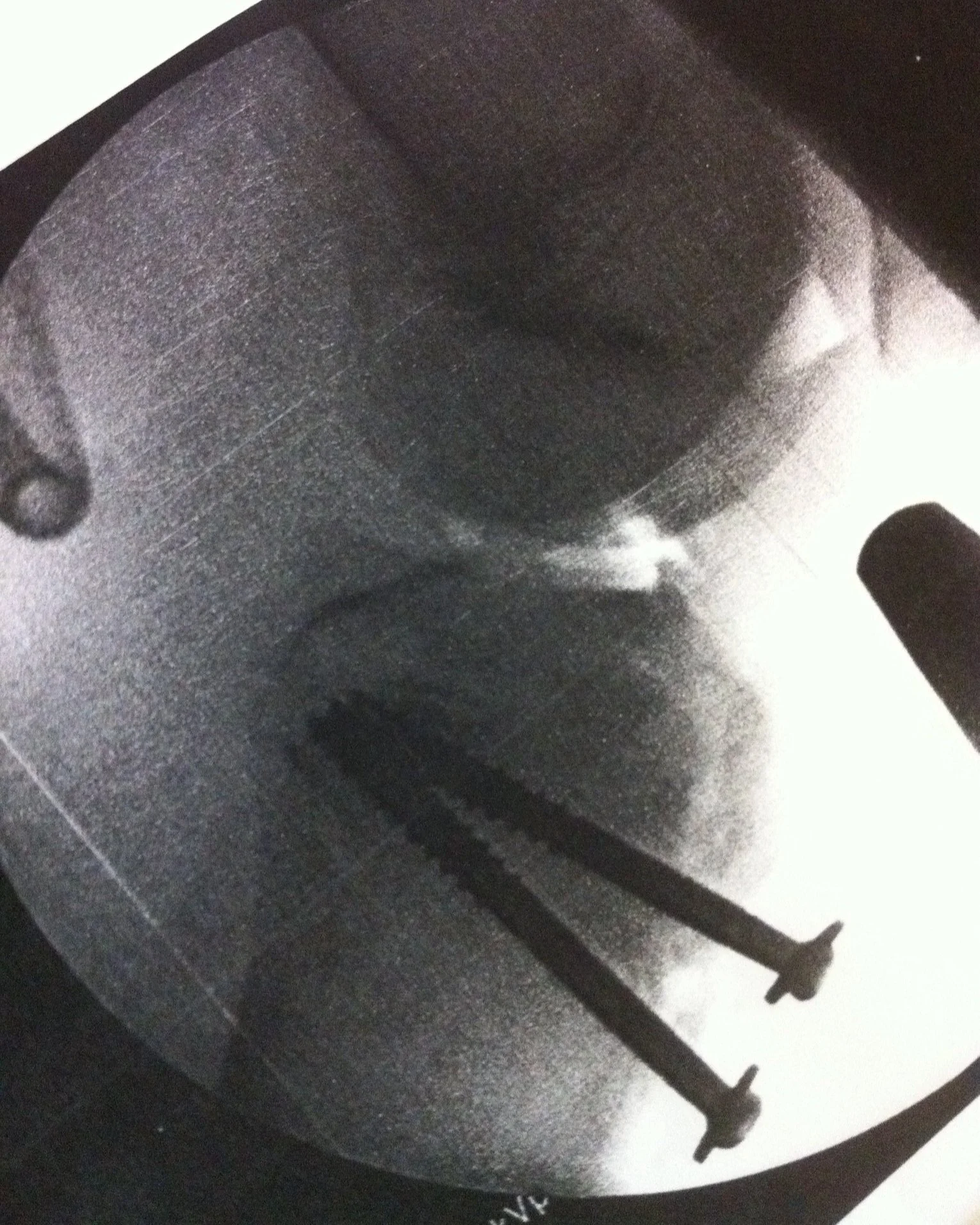
Yes this was an impactful moment, but the events following are wherein lie the rub. Because I was young and my blood was coursing with growth hormones, I had surgery and recovered fairly quickly and therefore did not learn my lesson. After all, what is there to learn when you’re a teenager and you can bounce back from literally anything.
2 - The Covenant
Without boring you of too many narcissistic details, I came back from the injury bigger, stronger, more motivated and eventually earned multiple scholarship offers to play Division I football. I made a promise to myself to do more, naturally, because more = better and I finally signed a national letter of intent to live my dream. In college, I was met with the rude awakening that is a level of competition I wasn’t prepared for, but I adapted. I grew, tuned my skills, and had success. Even though I was rigorously studying to become an exercise scientist in the background, I did not heed the instruction of this newfound knowledge and almost burned myself out of my love for the game of football.
3 - The Second Fall
This “more = better” attitude combined with an experience of college football that was lackluster and that most will never perceive, I reluctantly entered into training for a pro day after my senior season. In the midst of this training, I went on a snowboarding trip where, on the first run of the first day, I tore all three ligaments connecting my acromion-clavicular joint in my right shoulder. What I hadn’t realized until this exact moment was that prior to this event, during my pro day training, was the deep truth. This was embedded in the most divinely-interventional conversation with an elderly woman in a grocery store late at night, only weeks prior. In so many words, she (a messenger?) revealed to me in so many words that my calling wasn’t that of a professional football player, but something else. Something more impactful, something that the unifying principle could pull from my life’s events to give for the betterment of other young athletes. Something that allowed others to have the “me” that I never had. Someone that could help young athletes understand that more ≠ better.
“MORE ≠ BETTER”
The Big Picture
Soon after I graduated and began working in the field of sports performance, strength and conditioning, fitness, whathaveyou, I quickly realized the issue of young athletes not understanding how to train. The industry that I had just stepped into was absolutely littered with things like genius, ego, beauty, toil, sacrifice to the highest, sacrifice to the pointless, humility and pride. In short, it was a mess. Even today, if you take a bird's eye look at the landscape, you’ll realize that it may be the most underregulated field in the world in proportion to its magnitude and market value. Ok, maybe second-most behind the global illegal drug market.
If you will take just a second to fathom the vastness of sports in its entirety on all levels and the fitness industry and both of those fields’ progression over the last 150 years, you can only imagine how the innumerable coaches, trainers and wannabe’s impose their ideologies on athletes and the general population alike. Some things stick, some don’t. The things that stick don't inherently carry the virtue that makes them right or good. Sometimes it just means that someone somewhere is making money or that it’s rife with novelty or that it makes people feel good. So what’s the solution? How do you organize this mess to classify what’s good and bad, what works and doesn’t work, what makes a good coach or a bad coach? After all, these coaches’ roles aren’t trivial. Professional and even collegiate sports have a giant impact on the global market, regardless of how poorly it’s measured. On a more individualized scale, a good personal trainer can save a person tens of thousands of dollars in medical bills and in many cases, their very life.
If your first thought on how to fix this issue was to regulate the field through a government agency in the medical establishment, let me bluntly explain to you why that will never happen: healthy people stunt profits for the medical industry. As dark as it sounds, it’s the truth. If you’re not fat, a smoker, cancerous, or weak, the medical industry along with its evil brother - Big Pharma - can’t make any money off of you. Educated and well-trained medically-certified personal trainers or strength coaches would only steal business. “Alright then, what if there was just a privatized organization that could offer a science-based rigorous certification that could qualify coaches and trainers at different levels?” Well there is. Kind of. There are thousands to be exact. There are a few who have been around for a long time that have nearly monopolized markets like collegiate strength coaching. There are new ones popping up every day. There are kettlebell certs, landmine certs, even a “Social Media Fitness Influencer” cert and I am not kidding in the slightest. Sure, this is a danger of the free market. But here’s the difference between this industry and all others: the average product in another industry will sell based on the demand of the product that is based usually on the quality and cost of the product. This is common knowledge. However, in this field, there are three significant reasons why the above statement does not ring true: 1) The average consumer (along with many of the service providers) cannot differentiate between good training and bad training. 2) Because the consumer cannot demonstrate qualitative reasoning, what sells is what feels good or what is novel. Unfortunately, those two reasons often lead away from “healthy” rather than towards it which creates a net negative impact. 3) Because the consumer is blindly chasing novelty, typically the organizations that grow the largest are the ones who do not deliver the best product, but instead deliver the biggest hit of dopamine. This leaves the best product high and dry.
One very important note to make right here is that of care. It’s very difficult for a practicing coach to be a good coach in the technical sense (being educated, hard-working, results-driven, etc.) but to not care about their athletes’ emotions, personal lives, family, etc. If the motivation for this care is not because this coach is simply a humble and sympathetic human being, at the very least, caring about such things will actually lead to a better ability to deliver good coaching to the athletes.
Obviously this is an oversimplification of what’s truly going on, but it’s a large problem and you can witness it anywhere in the country. More than likely you can witness it in any first world country. There are never simplistic resolutions to complex issues. To boil down what the actual issue with the sports performance and fitness is would be one word: discernment. Thankfully, I have had the blessing of observation and attention to detail to the degree that I take careful note of older* coaches and trainers who are now resentful toward themselves, their athletes and clients and their job as a whole. The thought of ever getting to that point scares me. So, how do I not? Like Gandhi said, “be the change.” So, folks, that’s why you’re here. If you don’t know the answers to questions like “What are the qualities of a good coach?” or “Should I back squat or front squat?” or “At what age is lifting safe for kids?” then please indulge that curiosity and have a look around the site. This is the purpose. This is the way.

I’m clearly very passionate about this and my main purpose for this site is to educate athletes, coaches, parents, and people who just want to be healthy on anything and everything related to training. The more people I can educate, the better off this field will be and the wiser the consumer thereof.
Culture
When you begin to learn what good training looks like, you also begin to be less excited about it because the truth is that largely the best training out there is very boring and very simple. Fancy equipment and exercises have never stood the test of time and are not used widely by good coaches. Novelty has a relatively small seat at the table. However, something that can have a much more variable impact on the training experience is culture. Culture is the cumulative attitude of the people within a community. Vibes, if you will. I’ve seen bad culture turn over ownership and eventually close gyms. I’ve seen mediocre culture suck the life out of coaches and athletes, and never being bad enough to reach the breaking point, become a cockroach roost that lasts years, even decades, stealing potential from a network of communities and their children and their children. I’ve seen just good culture completely catalyze a community into health, growth, prosperity and strength on all fronts. I’ve seen great culture imitate the archetype of the castle on the hill. These cultural epicenters beckon from far and wide to those who align with their values of constant growth and adaptation. The athletes who submit themselves to the fire of these cultures are molded by it and become part of the culture that they can then take with them and use for their own success as well as shining a positive light in other dark places. Those who aim to impose their egotistical presuppositions and impure practice in this great culture are quickly chewed up and spit out. This is the type of culture that nurtures growth and that makes good training far less boring. Good culture may be represented at first glance by great taste in music, aesthetics, equipment, training modalities and branding, but anyone who has ever been part of something of this sort can tell you that great culture is truly represented best by the individuals curating the environment. Great culture cannot be replicated, only constructed with immense attention to every single brick. Great culture is not a front or tied to a geographical location, but it is the lifestyle of those who lead it. For this reason, great culture is not simply limited to programming or the environment of a gym, but expands into things like the philosophy of nutrition, recovery and fellowship. Great culture may look like perfection in this description, but those who have been around the block know that perfection is unachievable and that only in the pursuit of what is highest can we approach perfection. And that, specifically, is what great culture means. Now, on to the most efficient and highest ROI toward great culture that I’m aware of…
Personal Responsibility
The Spider-Man franchise has been obliterated in its essence with remakes until the cows come home, and it doesn’t seem to be slowing down. However, in its original rendition - the 1962 closing narration of the late Stan Lee’s comic book series - Uncle Ben is quoted as saying in his final breath, “With great power comes great responsibility!” This axiom is not to be understated.
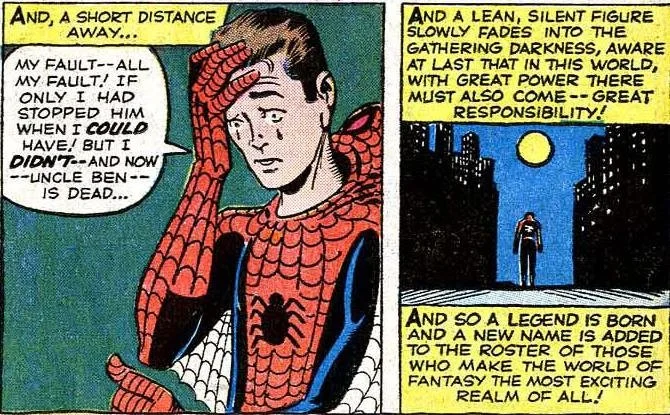
Power can take many forms and includes, but is not limited to: knowledge, wisdom, strength, skill, wealth, authority, sympathy and experience. Regardless of the form, the hierarchy of power runs parallel to the hierarchy of responsibility. This means exactly what Uncle Ben said: the more powerful (intelligent, strong, rich, etc.) you become, the greater the load of bringing up those around you. This makes power much less desirable upon first reading. Responsibility is scary. However, as anyone with great power who has successfully reciprocated it can tell you, accepting responsibility is the most efficient way to personal growth and creates the strongest attributes for living, as opposed to surviving. On the flip side, as enticing as that revelation is, you must also accept the reality of where you are at this moment in that hierarchy of power, and that the only way up is to accept more and more responsibility. The path up is a straight and narrow path and is not to be taken lightly. Reference Sisyphus, the Greek myth of the mortal king who placed himself higher up in this hierarchy than he actually was, and for punishment was sentenced to pushing a boulder up an endless mountain. This concept, taken in its entirety, applied to our purposes now means something like this…
As an athlete:
To distinguish good from bad training as well as good from bad coaching.
To recognize the reality, but also the skill that is respecting their coaches despite qualitative or personal differences.
To honor their parents, despite differences of opinion or preference on sport, training or coaching selection.
To place their education first, before their athletic career. Lord-willing and the creek don’t rise, their brains will far outlive their bodies’ peak performance window.
To learn as much as possible about their own training for sport so that all of the above responsibilities won’t seem so difficult to grasp.
As a coach:
To not take credit, but constantly prepare to have the answer when blame is assumed, regardless of the concreteness of that blame.
Humility to collaborate with other coaches that I may not appreciate, but to do so for the sake of the athlete and perhaps even the elevation of the other coach.
To have the self awareness to recognize when I’m wrong and when I need the guidance of another coach, peer or medical professional to properly train an athlete, to mitigate inevitable injury, or to better instill mental and spiritual growth.
To meet the parents of athletes where they are in terms of education or values for their children. To treat those parents with respect, regardless of their decisions for their children or opinions on what is best for their children.
As a parent of an athlete:
To obtain the humility that their kid may not be as talented and have as much potential as they hope and that a parent’s love for their child can cloud much of reality.
To not outsource core values, principles and virtue to the outside world including sport or S&C coaches.
To be educated and prepared for when their athlete enters into the realm of sports and to be able to distinguish good from bad coaching and training practices.
To learn and exhibit the fundamentals of training, nutrition and recovery so that they can be an admirable example as well as pass this on to their children regardless of potential athletic careers.
These examples are just that, and I encourage you to contemplate what it means for you in your specific situation to define what responsibility means. The most important point being: it’s on you. Blame is distributed by the least honorable. Don’t be a victim. Be the solution. Accept responsibility. Infuse responsibility. This is what it means to be a good athlete, coach, parent and human being.
Epilogue
This may seem like a wordy explanation of what this whole thing is about, but keep in mind that great literature isn’t great because it's accessible and easily understood. Otherwise, Tik Tok would be the greatest literature database of all time. I’m not claiming, by any means, that what will be published here will ever be considered “great literature.” However, if I’m to reach those who are hungry and striving after their purpose, then this demographic certainly won’t mind a little bit of articulation.
This platform is meant to be a wellspring for those who are taking up their mantle. For the young, aspiring athlete that doesn’t yet have someone leading them down the straight and narrow. For those who have a story of falling and getting back up again. For those who want to be educated. For those who yearn for and work to create great culture. For those who are willing to take responsibility for not only their hand in matters, but also for those who are not willing. For the servants. For those who say, “I’ll figure it out.” For the strong. For the weak. For the ever-growing. For the meatheads. For the pencil-necks who don’t want to be. For the fat who don’t want to be. For those who won’t build isolating excuses. This is a place for discourse on how to train, eat, sleep and relentlessly live in the study, practice and coaching of Kinesiology.